

When most people think of "winter property maintenance," they picture the harsh conditions of the Northeast—heavy snow and ice dams. But real estate investors in North Texas face a unique set of challenges. In the DFW Metroplex, winter doesn't mean a steady blanket of snow; it means "Blue Northers," rapid temperature swings, and the occasional severe ice storm that can paralyze the region.
Even if you are a passive investor working with a property management team like ELLIS HomeSource, understanding DFW-specific winter requirements helps you preserve your asset's value and budget effectively for the season.
Why DFW’s "Rollercoaster" Weather Requires Strategy
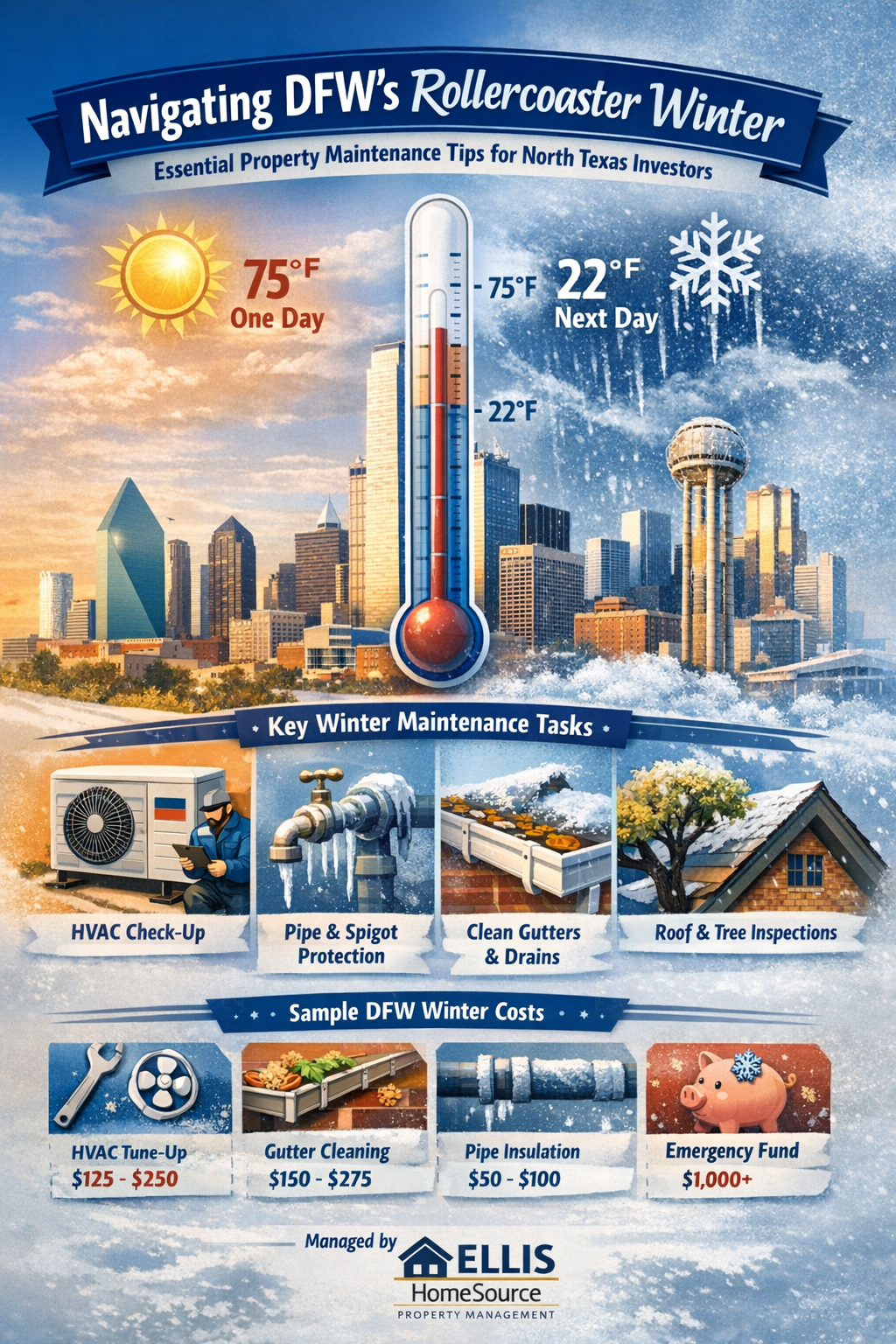
The Dallas/Fort Worth area is famous for its unpredictable winters. It’s not uncommon to see a sunny 75°F Monday followed by a 22°F "hard freeze" by Wednesday morning. This variability creates specific stresses on a property:
The Freeze-Thaw Cycle: In North Texas, water seeps into small cracks in masonry or pavement during warm afternoons, then expands when it freezes at night. This can lead to accelerated wear on driveways and exterior brickwork.
HVAC Stress: DFW systems often toggle between air conditioning and heating within the same week. This constant cycling requires robust electrical components and clean filters to prevent mid-season breakdowns.
Foundation Health: Our heavy clay soil is sensitive to moisture changes. Proper winter drainage is essential to prevent the "heaving" that occurs when water pools and freezes near the foundation.
Essential Winter Maintenance Tasks for DFW Properties
1. HVAC System Servicing & "Heat Strip" Checks
Most DFW homes utilize electric heat pumps or gas furnaces. For heat pumps, it is vital to ensure the "emergency heat" (auxiliary heat strips) is functioning before the first true freeze.
Recommendation: Have a technician verify that the transition from cooling to heating is seamless to avoid late-night emergency calls from tenants.
2. Critical Pipe & Outdoor Spigot Protection
The 2021 winter storms taught us that DFW infrastructure isn't always built for sustained sub-zero temperatures.
Action: We ensure all outdoor faucets are drained and fitted with insulated covers. For older pier-and-beam homes common in areas like East Dallas or Fort Worth, checking the skirting and pipe insulation is a high priority.
3. Gutter & Drainage Clearing
In North Texas, oak and pecan trees often drop their leaves late into December. Clogged gutters during a DFW ice storm can lead to heavy ice dams that pull gutters away from the roofline or cause interior leaks.
Action: A post-fall gutter cleaning is mandatory to ensure winter rains and melting ice flow away from the foundation.
4. Professional Roof & Tree Inspections
Ice storms are more common in DFW than snow. The weight of ice on overhanging "widow-maker" branches can lead to roof damage or downed power lines.
Action: Trim branches back at least 3-5 feet from the roofline to prevent structural damage during a freeze.
Winter Budgeting for the DFW Market
Smart investors budget 1–3% of the property’s value annually for maintenance. In the Metroplex, winter-specific costs are generally predictable but essential for avoiding the "emergency premium" charged by vendors during a freeze.
Service Item | Estimated DFW Cost | Frequency |
HVAC Seasonal Tune-Up | $125 – $250 | Annually (Pre-Winter) |
Gutter Cleaning (Standard Home) | $150 – $275 | After final leaf drop |
Chimney Sweep/Inspection | $200 – $350 | If applicable |
Exterior Pipe Insulation/Covers | $50 – $100 | One-time / Replacement |
Emergency Repair Reserve | $1,000+ | As needed |
Note: These costs are generally tax-deductible and serve as "insurance" against much larger capital expenditures.
Partnering with ELLIS HomeSource
At ELLIS HomeSource, we manage the boots-on-the-ground details, so you don't have to worry about the weather forecast. Our proactive winter protocol includes:
Tenant Education: We send reminders to residents on how to "drip" faucets and keep cabinets open during extreme freezes.
Vetted Vendor Network: We use trusted DFW contractors who prioritize our portfolio during peak demand periods.
Preventative Inspections: Catching a worn furnace igniter in November is significantly cheaper than replacing a frozen pipe in January.